The claim that SEO is dead has surfaced for years, and it has never been right. Search still sends customers to local plumbers, roofers, electricians, HVAC teams, and remodelers every day.
However, search results are changing fast. Google AI Overviews, AI Mode, ChatGPT Search, and Microsoft Copilot can answer questions before someone ever reaches a list of blue links. Home service companies now need visibility inside those answers, while keeping local SEO strong enough to generate calls, booked jobs, and better marketing ROI.
Traditional SEO focuses on ranking a webpage. Answer engine optimization, or AEO, focuses on getting a useful answer, brand, or source selected inside an AI-generated response. Generative engine optimization, often called GEO, uses many of the same practices.
Google's AI features pull information from crawlable pages, business listings, reviews, and other trusted sources. That means the old work still matters: useful pages, accurate business information, fast websites, strong reviews, and credible local signals. Google's guidance for generative AI features makes the point clear, there is no separate trick that replaces helpful, accessible web content.
Google has also connected AI Overviews with AI Mode, where searchers can ask follow-up questions in a conversation. Within the next two years, first-page rankings may no longer be the main scoreboard for many research-heavy searches. Being cited by trusted answer engines will carry more weight.
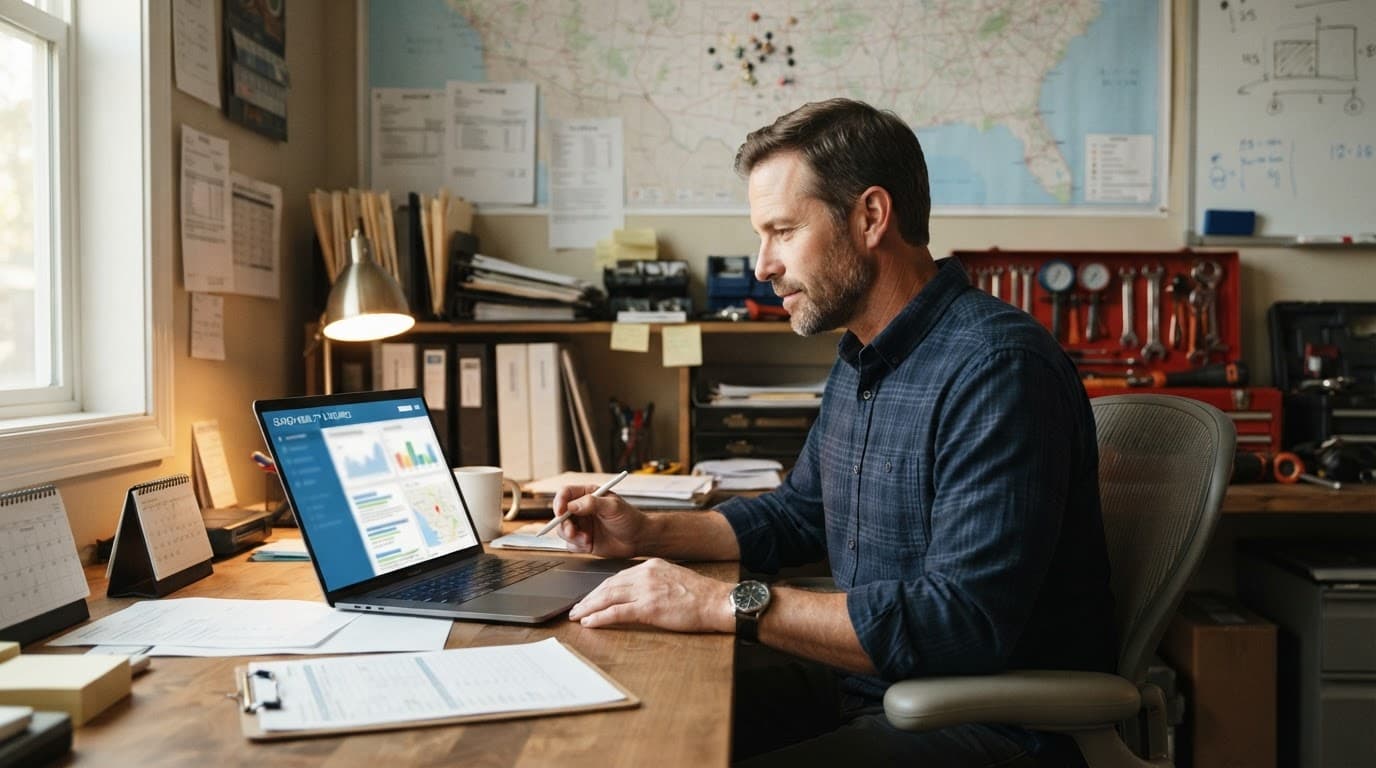
A citation places your information in front of a homeowner during the decision process. They may see your repair advice, pricing explanation, or local expertise even when they never click through to your website.
An AI mention, a citation, a click, and a conversion are different outcomes. Visibility means your company appeared. A citation means the answer engine linked to or named your source. A click brings someone to your site. A conversion happens when that person calls, books, or requests an estimate.
Organic rank still helps, yet it does not guarantee an AI citation. Ahrefs reported in 2026 that only 38% of Google AI Overview citations came from pages ranking in the top 10 organic results in its large-scale analysis. A page that directly answers a narrow customer question can earn attention beyond the classic first page.
A strong organic position remains useful, but an AI answer can choose the clearest and most credible source instead of the highest-ranked page.
AI answers are most likely to intercept research and comparison searches. Homeowners often ask questions like "How much does water heater replacement cost?" or "How do I know if my roof needs repair?" before they are ready to hire.
Those searches create an opening for practical content. A contractor who explains warning signs, typical options, permit concerns, project timing, and cost factors can become part of the customer's shortlist.
Urgent local searches work differently. Someone searching "emergency HVAC repair near me" or "plumber open now" wants a phone number, availability, reviews, and directions. Google Business Profile results, the local pack, and call-focused ads still matter enormously for those moments.
A basic service page and a paid ad campaign no longer cover the full customer journey. Homeowners compare repair options, warranties, installation timelines, energy savings, and contractor reputations before they pick up the phone.
That is why the phrase SEO is dead misses the real issue. SEO is becoming part of a broader visibility system. A strong local business needs to appear in maps, standard search results, review sites, AI summaries, and branded searches.
For brick-and-mortar service businesses, that visibility can improve lead quality. A homeowner who understands likely causes and realistic timelines before calling is less likely to demand an impossible price or expect same-day work for a non-emergency project.
The payoff is practical: fewer wasted calls, stronger close rates, and more productive ad spend. Research content may produce fewer raw clicks than it once did, yet it can still influence the customer who later searches your company name or calls from your Google Business Profile.
Your best topics already come from phone calls, estimate visits, and technician conversations. Write down the questions customers repeat every week, then answer them with direct, local detail.
Useful topics include repair-versus-replace decisions, seasonal maintenance, installation preparation, project timelines, common warning signs, local permit requirements, and transparent cost drivers. A page about furnace replacement should explain equipment size, ductwork condition, electrical upgrades, and disposal, not hide behind a vague "contact us for pricing."
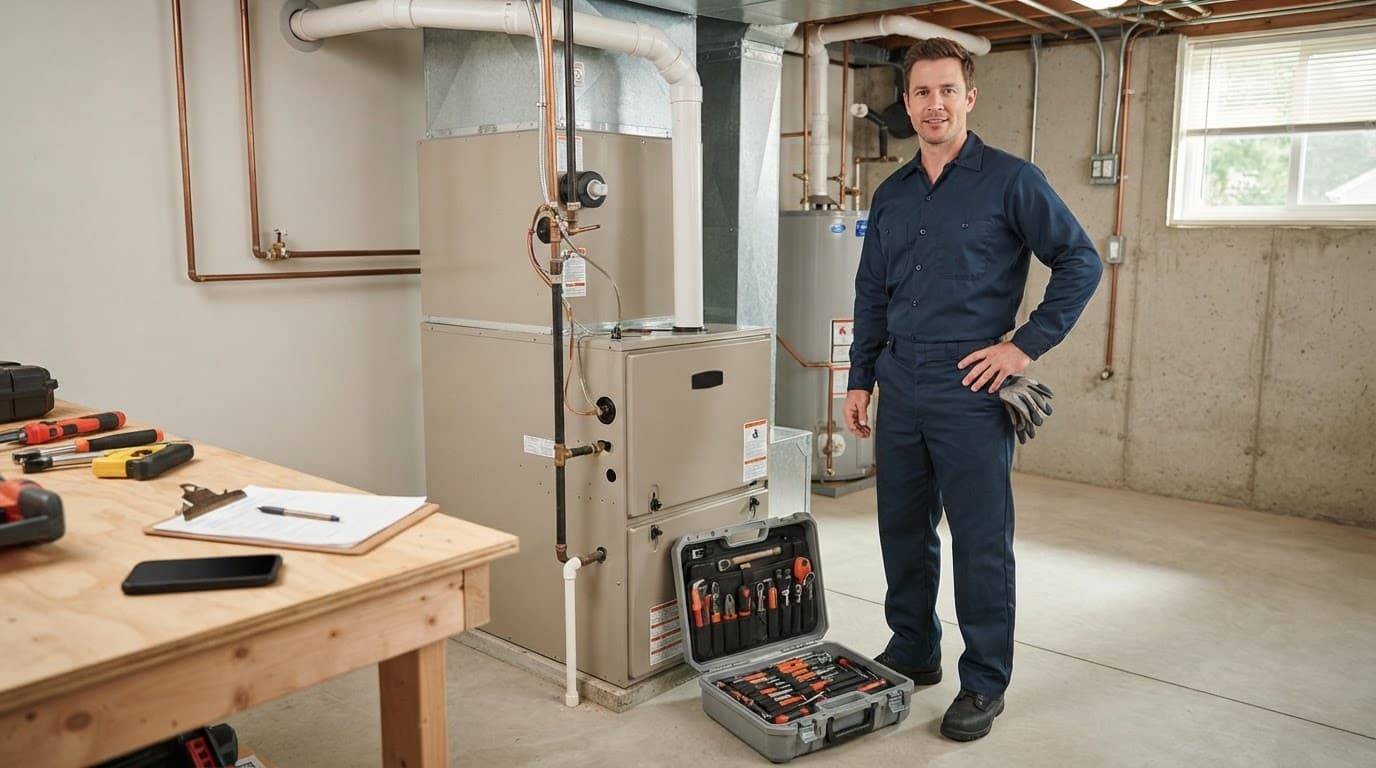
Add the details only a working local company knows. Mention the neighborhoods you cover, the age of common housing stock, local weather conditions, permit offices when relevant, and photos from actual jobs. Update date-sensitive guidance when codes, hours, service areas, or policies change.
Thin city pages created only to repeat keywords are a poor substitute. A useful location page explains what you do in that community and gives customers a reason to trust you there.
Answer engines need to connect your website to a real local business. Consistent details across the web help them do that.
Keep your name, address, phone number, business hours, service categories, website, and service areas accurate in Google Business Profile, Bing Places, industry directories, review platforms, social profiles, and local trade associations. Local search reporting has highlighted how Google Business Profile data influences AI search visibility, especially when customers need a nearby provider.
Reviews matter because they describe actual work. Ask satisfied customers for honest feedback after completed jobs. Respond to reviews professionally, including critical ones. Also pursue real mentions from local publications, chambers of commerce, suppliers, and community groups.
Spammy directory submissions do not build trust. A genuine local reference is harder to earn, and it carries more meaning.
No company can guarantee an AI citation. Google, ChatGPT Search, and Copilot use different systems, and their source selections can change by query, location, and time.
Still, home service businesses can make citation-worthy information easy to find. Start each page and major section with a plain answer to the customer's main question. Then support it with context, options, limitations, and proof.
Use question-based headings where they fit. Keep paragraphs short. Add comparison tables only when they help a homeowner choose between clear options. Link related pages together, such as an AC repair page, an emergency HVAC page, a maintenance plan page, and a city service page.
Structured data can help search engines understand business details, services, reviews, and FAQs. It cannot force a citation. Clear content and accurate information remain more important.
Service pages should answer the customer's concern before asking for the job. A furnace repair page can explain common symptoms, likely causes, emergency warning signs, possible repair paths, and factors that affect price.
For example, a page titled "How much does furnace repair cost in Cleveland?" should not invent a universal flat rate. It can explain that diagnostic fees, parts, system age, after-hours service, and safety issues affect the final bill. Then it can describe how your company provides estimates and what the visit includes.
Location pages should also state service boundaries clearly. If you don't serve a suburb, say so. Accurate limitations build more trust than a page that claims an entire metro area.
Include information customers need before calling:
Broad claims such as "best service in town" say nothing useful. Proof gives homeowners and answer engines something solid to evaluate.
Publish short job stories that show the situation, the service area, the work completed, and the customer takeaway. A roofer can document storm damage found during an inspection. A plumber can explain why a recurring backup required a camera inspection. An electrician can show how a panel upgrade solved capacity problems in an older home.
Use original before-and-after photos, technician credentials, licenses, manufacturer certifications, warranties, and verified reviews. Local AI search research also points to the growing role of reviews, citations, and local listings in how businesses appear within AI-assisted results.
First-hand information gives your site a voice that generic AI-written pages cannot copy.
AEO can reduce clicks from informational searches because an AI answer may satisfy the searcher. That does not automatically mean marketing performance has declined.
Track results by intent. Separate informational, comparison, emergency, local, and branded traffic. Then compare what each group does after it reaches your business.
Watch Google Business Profile calls, direction requests, website clicks, local pack visibility, organic rankings, AI referral traffic when available, branded search growth, form submissions, and phone conversions. More importantly, track qualified lead rate, close rate, average ticket, cost per booked job, and revenue per visitor.
A campaign that generates cheap calls but few booked jobs is expensive. A page that generates fewer leads but produces high-value installations may be far more profitable.
Clear answer content pre-qualifies homeowners. Someone who reads your explanation of sewer line replacement options may call with better expectations about access, timing, and budget.
Review search term reports regularly. Broad research queries may become less productive when AI answers satisfy early-stage questions. Meanwhile, protect high-intent local keywords, branded searches, call-focused campaigns, Local Services Ads where available, and retargeting audiences.
Judge every channel by booked work and revenue. Cost per lead is useful, but cost per booked job tells a more honest story.
AI search has real risks. Answers can be inaccurate, citations can disappear, and old information can spread if your business listings are neglected. A wrong phone number or outdated emergency-hours statement can cost a job.
Keep your website, Google Business Profile, Bing Places listing, reviews, email list, referral network, and paid channels active. A diversified marketing mix gives your company more control when a platform changes its results.
Audit service areas, hours, certifications, pricing guidance, and major claims every quarter. Remove stale information quickly. Customers notice inconsistencies, and so do search systems.
SEO has not disappeared. It has expanded beyond a race for one blue-link position. The winning home service company is easy to find, easy to understand, easy to trust, and easy for answer engines to cite.
Start with the questions your customers already ask. Build direct answer pages, strengthen your local business profiles, publish real proof, and measure booked jobs instead of vanity metrics.
The companies that reject the idea that SEO is dead, while preparing for AEO and GEO, will be better positioned to win high-quality local customers.